
The Hidden Legal Risk of Subjective Hiring

Subjective hiring exposes the organization to legal and compliance risks. Why subjectivity is indefensible — and how objective, content, and criterion-valid job-specific assessments protect organizations Hiring involves emotional effort. Hiring managers seek confidence, while candidates aim to display it. However, beneath stories and good intentions lies a legal challenge: subjective hiring can put the […]
Why Scheig’s Assessments are Valid, Accurate, and Worth Trusting

SelectRight™ assessments replace guesswork with proven prediction. Organizations hire based on hope more often than they admit. A polished résumé, a confident interview, a relevant credential — they all ease uncertainty. But they do not, reliably, predict who will perform consistently over time. Scheig’s assessment methodology goes beyond guesswork to deliver proven predictions. Built […]
A Job Success Profile

The Job Success Profile™ changes the hiring conversation Every organization already has a blueprint for success — it’s embedded in how your top performers do their work. Every employer considers “what the job is.” Few organizations have a clear, objective answer to the tougher question: how do the people who truly succeed in that […]
Turn Personality Tests on Their Head: Measure the Job, Not the Trait

Measure what people actually do on the job — not which trait label they earn in a survey Personality = abstract. Behavior = predictive. Here’s a simple rule: if it won’t change the outcome on the job, it shouldn’t change your hiring decision. Hiring teams love tidy labels. Personality tests give them neat categories […]
Why Even the Most Technical Jobs Are Only ~30% Technical, and How to Turn the Remaining 70% Into Hirable Evidence

Credentials confirm who can, job behaviors reveals who should The 30% Problem You’ve seen it before: two candidates arrive with the same license, the same certificates, and similar résumés. One becomes a steady contributor; the other becomes a recurring problem. That gap is the 30% problem: roughly 30% of a job’s predictable success is […]
Hire for Behaviors, Train for Skills
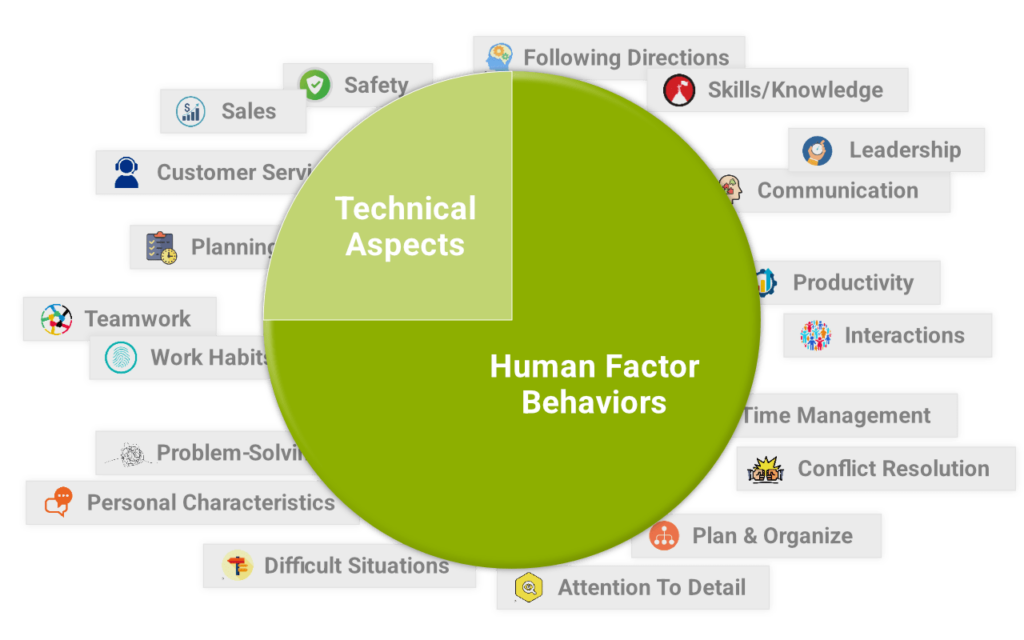
Hire for Behaviors, Train for Skills Why Scheig’s Behavior-first Method — Combined with a Test-and-Measure Discipline — Turns Hiring from a Coin Flip into Predictable Performance There’s a tempting logic in hiring: credentials prove competence, résumés show exposure, and interviews reveal fit. But Scheig’s research is clear and firm: these inputs can only take […]
When Credential Isn’t the Difference: Why Job Behaviors Distinguish the Truly Skilled from the Just Qualified
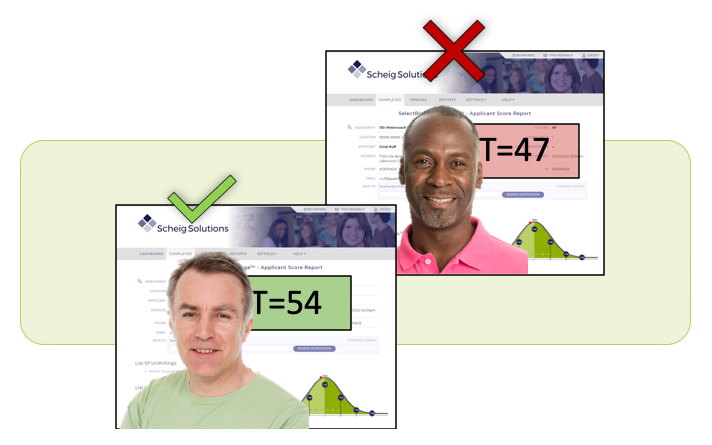
Technical competence — the “can they?” — is essential but often only a small part of the performance picture. A license, certification, or credential clearly shows that this person has passed a standardized test or completed required training. A résumé, on the other hand, indicates where someone has worked and what they have been […]