
Why Scheig’s Behavior-first Method — Combined with a Test-and-Measure Discipline — Turns Hiring from a Coin Flip into Predictable Performance
There’s a tempting logic in hiring: credentials prove competence, résumés show exposure, and interviews reveal fit. But Scheig’s research is clear and firm: these inputs can only take you so far. Licenses and certifications demonstrate that someone can do the work; résumés show they’ve seen the work; interviews often feel like a verdict but are, in many situations, little better than a coin toss. The key factor — the one that explains why two equally credentialed people perform very differently on the job — is behavior.
Centered in this approach is our practical mantra:
Hire for behaviors. Train for skills.
That isn’t just marketing copy. It’s a methodology: hire based on observable, repeatable actions that genuinely produce results, and view technical skills as trainable inputs added after establishing the behaviors that support performance. This post explains why that mantra is important, how Scheig implements it, and how combining these methods with a disciplined test-and-measure approach leads to more consistent, scalable hiring results.
The Problem in Plain Terms
We observe this pattern everywhere: two physicians with identical certifications but very different patient outcomes; two attorneys who passed the same bar but whose case results vary greatly; two electricians or drivers with the same license, where one maintains a spotless safety record and the other accumulates incidents.
Why? Because credentials and exposure are binary or categorical signals. They indicate that someone met a standard at a specific point in time. They don’t show whether that person consistently performs the small, routine, often unnoticed actions that prevent problems, uphold quality, and ensure safety. Scheig’s work redefines hiring as a measurement challenge: interviews and résumés are noisy indicators; behaviors are the high-signal metrics you should base your selection system on.
Behavior: the Real Differentiator
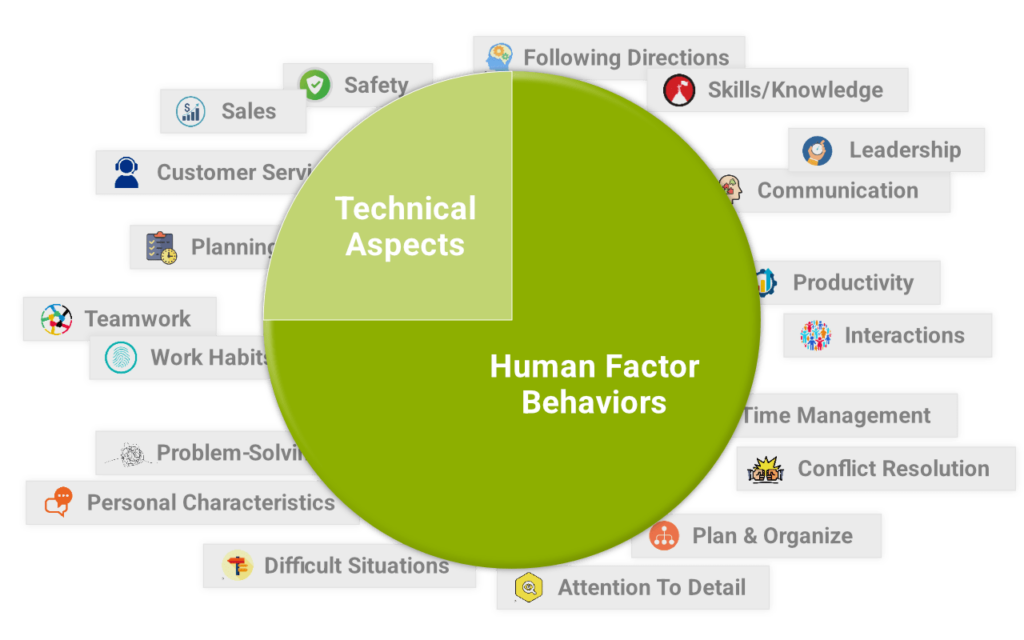
Scheig’s exhaustive job analyses show the same result across roles: technical skill matters, but a large share of predictable performance is explained by job-specific human-factor behaviors. Examples include reliability, attention to detail, escalation judgment, persistence on routine tasks, and collaborative execution. These behaviors are:
- Observable — you can define them in plain language;
- Repeatable — they occur day after day; and
- Measurable — you can design simulations, questions and scoring rubrics that reveal them.
This is the heart of the “Hire for behaviors” idea. Licensure tells you a person can meet a standard; behavior tells you whether they will deliver consistent results. Scheig’s Job Success Profile™ is the practical product of that analysis: distilled, prioritized behaviors that predict success in the role.
The Cost of Ignoring Behavior
When hiring privileges credentials, polished résumés, or unstructured interviews, organizations pay in money, time, and risk:
- Productivity drains. Underperformers reduce throughput and slow team velocity.
- Manager attention. Leaders spend hours coaching, remediating, and redoing work that should be routine.
- Safety and compliance exposure. Behaviorally poor hires increase incidents, rework, and regulatory exposure — often costing far more than recruiting fees.
- Cultural erosion. Morale and momentum suffer — and fixing culture costs more than fixing a job description.
Scheig’s materials and client work frame these as diffuse, compounding costs: the slow leak of time and attention is more damaging than a one-time recruitment expense. Turning hiring into a behavior-based measurement problem is the most direct way to stem that leak.
Interviews: Why They’re Often a 50/50 Gamble — and How Behavior Can Improve That
Scheig repeatedly finds that interviews by themselves predict success roughly half the time. They do an acceptable job of removing obvious mismatches, but they break down when the choice is between two credentialed, “acceptable” finalists. Why?
- Interviews reward presentation, not repetition. A practiced answer or compelling anecdote demonstrates communication skill — and that matters — but it’s not the same as consistently producing the daily behaviors that the job requires.
- Human judgment is noisy. Different interviewers bring different expectations and unconscious preferences. Small differences in rapport, tone, or phrasing can tip a decision that has little to do with on-the-job effectiveness.
- Credential parity masks behavioral variance. When everyone checks the technical boxes, behavior is the tiebreaker — but interviews rarely reveal it reliably.
Add a test-and-measure discipline: test, measure, iterate
The behavior definitions and assessment tools tell you what to hire for. A test-and-measure discipline supplies the how — the continuous improvement loop that makes hiring better over time. That discipline includes:
- Define clear metrics. Translate behaviors into measurable outcomes: first-90-day productivity, error rates, safety incidents, time to competency. You can’t manage what you don’t measure.
- A/B test selection components. Run controlled comparisons: does a short simulation improve predictive validity versus an unstructured interview? Does adding a behavioral checklist reduce early turnover? Measure and keep what improves outcomes.
- Use small, fast experiments. Pilot a work sample for half your finalists and track outcomes. Iterate rapidly on question wording, simulation length and scoring anchors.
- Close the loop with outcome data. Feed hire-to-performance data back into your selection instruments so you refine what predicts success for your specific context.
This disciplined, experimental mindset converts selection from opinion to evidence and creates a virtuous cycle: small experiments, clear metrics and rapid learning produce steadily improving hires.
A practical playbook: steps to embed the mantra
- Articulate the Job Success Profile™. Use job analysis to name the 4–6 behaviors that predict success in month one and month six.
- Make interviews structured and anchored. Ask identical, behavior-focused questions and score answers against explicit anchors.
- Introduce short, role-relevant demonstrations. Work samples, simulations and critical-incident responses reveal actual behavior under realistic constraints.
- Score and weight evidence. Combine résumé signals, structured interview data and simulation results in a simple rubric; weight direct behavioral evidence most heavily. Scheig’s T-Score and Applicant Score Report standardize comparison across candidates and make behavioral match visible.
- Test and refine. Run controlled pilots, track hires’ outcomes, and iterate based on what improves productivity, reduces incidents and shortens time-to-competency.
- Train for skills after hire. Once behavioral fit is secured, invest in training to develop technical skills and role knowledge.
These steps are practical, quick to implement, and protect the organization’s most valuable assets: time, safety and team morale.
The payoff: predictable hires, not hopeful ones
When you hire for behaviors and train for skills — and you measure and refine the process — hiring becomes less about avoiding loss and more about creating predictable value. The benefits are tangible: faster time-to-productivity, fewer safety incidents, improved morale and a measurable lift in hiring accuracy. Scheig’s behaviorally based selection work demonstrates significant gains in predictability and legal defensibility when organizations move from impression-driven selection to evidence-driven selection.
Final thought
Licenses, certifications and polished résumés matter. They prove that a person can do the work. But they do not — and cannot — guarantee the steady, repeatable behaviors that make the difference between a dependable performer and someone who slowly consumes time, money and confidence.
If you want to stop hiring luck and start hiring reliability, begin measuring what people actually do. Define the behaviors that matter, give candidates the opportunity to demonstrate them, and manage your selection process with disciplined testing and clear metrics. Hire for behaviors. Train for skills. Measure what works — then keep doing it.