
Bad hires aren’t just a line item on a spreadsheet. They ripple through productivity, culture, compliance, and customer experience, while their costs add up faster than most leaders realize. If you’re an HR director, recruiter, hiring manager, owner, or CFO, understanding the true cost of a bad hire is the first step to preventing the next one from happening.
It Starts Small — And Ends Up Everywhere
A hiring mistake may seem minor at first: one underperforming employee, a missed target, a frustrated manager. But that’s only the surface. Beneath lie hidden costs that silently drain resources.
- Lost productivity. Work redistributed. Projects delayed. More rework. One weak performer can reduce a team’s output by 10–30%, depending on role and seniority.
- Manager time. Coaching, performance plans, disciplinary meetings, and hiring take hours that managers could use for strategy.
- Recruiting and onboarding. Costs include recruitment fees, internal recruiter time, interview panels, background and assessment expenses, plus the wasted onboarding costs.
- Culture and morale. When team members pick up slack, they risk burnout. Quiet disengagement can spread, often leading to higher turnover.
- Customer impact. Errors, missed deadlines, or poor service can damage customer relationships and reputation—sometimes for years.
- Legal and compliance risk. Poor hires in regulated roles may lead to fines, lawsuits, or operational shutdowns.
Those categories are measurable — if you decide to measure them. The costly part is that many organizations only track direct recruiting expenses and overlook the rest.
Why Your Budget Doesn’t Capture the True Loss
Finance teams prefer clean line items. Recruiting fees, sign-on bonuses, and salary replacements are simple to tally. But the most harmful impacts of a bad hire are spread out.
- They are slow: performance gaps decrease team output over months, not just a payroll cycle.
- They are social: disengagement and lost institutional knowledge spread across people, not GL codes.
- They are reputational: a single customer failure can cost more than a hiring manager’s bonus budget.
Because these effects fall into operating expense lines, discretionary budgets, or intangible metrics like employee engagement, they’re rarely linked back to a single hire. That’s why a “bad hire” often seems inexpensive—until you look at the outcomes.
The Math Managers Should Be Doing
Here’s a practical way to estimate the true cost. Start with a conservative approach:
- Direct recruiting cost = agency fees + internal recruiter time + advertising + assessment costs.
- Onboarding cost = first 3 months of ramp-up (trainer time, lost productivity).
- Lost productivity = team productivity difference × months affected.
- Manager overhead = hours spent managing performance × fully loaded manager rate.
- Turnover and rehiring = severance + new recruiting + onboarding again.
- Intangible cost multiplier = 10–25% of the subtotal to account for morale, customer impact, and brand.
Even when using conservative numbers, the total often multiplies the direct recruiting cost by 3–5x. For high-impact roles (sales, safety, finance), it’s common for a single bad hire to cost a year’s salary or more.
Behavior Matters More Than Resume Keywords
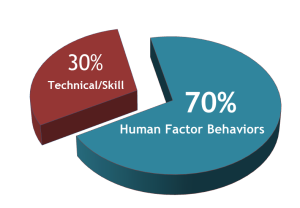
Traditional hiring relies on credentials and surface-level interviews. That’s exactly where organizations go wrong. The gap between a candidate who seems good on paper and one who actually performs lies in behavioral fit—what they do under pressure on the job. Behavior-based, job-specific assessments reveal how candidates will act in role-relevant situations. They avoid hypothetical questions and instead observe patterns that forecast on-the-job performance: decision-making, interpersonal flexibility, attention to detail, and responses to real task demands. Using assessments that are both job-specific and behaviorally grounded helps reduce false positives (people who test well on resumes but fail in practice) and false negatives (good performers overlooked because they didn’t appear suitable).
Where Most Hiring Systems Fail
Common Pitfalls I See After a Decade in HR:
- One-size-fits-all assessments. Generic personality tests overlook the specific needs of each role.
- Overreliance on interviews. Unstructured interviews help with screening but are poor predictors of job performance.
- Ignoring manager fit. A candidate who fits the role but conflicts with the supervisor can become a problem.
- Neglecting cultural signals. Cultural fit isn’t about sameness—it’s about whether a candidate’s behaviors match key operational values.
These issues can be fixed, but they require shifting from “who looks good” to “who behaves right.”
A Better Approach: Predictability, Not Guesswork
To reduce the true costs of poor hiring, implement a predictable, repeatable process:
- Define the job using behavioral terms. Identify the specific actions that define success. Document observable behaviors and outcomes.
- Use assessments tailored to the job. Select tools based on job analysis and validated against actual performance, not just surveys.
- Structure interviews around specific behaviors. Use behaviorally anchored interview guides linked to assessment results.
- Measure hiring success. Connect new hires to 90-day productivity, retention rates, and managers’ satisfaction scores.
When hiring is approached scientifically, the Return on Investment (ROI) is immediate. Expect shorter time-to-productivity, reduced early turnover, and increased team engagement, all measurable and amplified with each hire.
The Strategic Upside: Hiring As Investment, Not Cost
When you view hiring as an investment, you perceive it differently. Each new employee becomes an asset that should grow in value (through training, mentoring, and opportunities) rather than a cost center that might decline if poorly chosen. Investing in better selection tools pays off by reducing rehiring costs, addressing performance issues, and improving customer outcomes.
Final Thought: Your Budget Line Is Only the Beginning
If you only consider the line in your budget labeled “recruiting,” you’ll consistently underinvest in the area with the greatest impact on long-term costs: selection quality. The right, behaviorally driven, job-specific assessments not only reduce churn, but they also safeguard productivity, culture, and customer trust.
In simple terms, the true cost of a bad hire exceeds a single budget line because it affects your people, processes, and customers. Improving hiring isn’t just an HR matter; it’s a crucial business necessity.