
Interviews should be earned—not automatic
Interviews are valuable because they allow hiring managers to understand nuances, assess judgment, and gauge fit. However, that value only exists when interviews are targeted at the right candidates. If not managed carefully, interviews can become costly theater: managers sit through conversations unlikely to result in a hire, candidates waste time, and the organization suffers from lost productivity and morale.
Scheig’s fundamental advice is straightforward and direct: avoid interviewing every applicant. Use objective, job-focused pre-qualification to ensure interviews are earned — reserved for candidates who already demonstrate behavioral suitability for the role. The benefits include clearer decisions, faster hiring processes, and managers who use interviews to select from genuine finalists rather than sorting through irrelevant noise. The rest of this brief essay explains why pre-qualification is effective and how it makes measurable, practical improvements to hiring.
Why Interviews Should Be Earned
Three plain problems define the status quo:
- Interview overload. When every applicant advances to an interview, managers spend hours repeatedly addressing the same weaknesses. That’s manager time that could be better used for coaching, planning, or improving operations.
- Low interview-to-hire ratios. Interviewing broadly results in a low conversion rate: many interviews, few successful hires. This increases recruiting costs per hire and diverts team bandwidth.
- Poor candidate experience. Interviews that feel routine or unimportant signal disrespect to candidates and harm the employer brand.
Pre-qualification addresses these issues by screening out low-probability applicants early—before managers spend hours on interviews. This filtering leads to fewer, higher-quality conversations and a much more efficient use of managerial time.
What Effective Pre-Qualification Looks Like
Scheig’s selection process is intentionally simple and based on the job:
- Job analysis → Job Success Profile™. Begin with top performers to identify behaviors that lead to success. These key behaviors set the standard.
- Assess early. Use the SelectRight™ pre-employment tool (Interest & Willingness, Self-Ratings, optional Critical Incidents) to evaluate how well candidates match the Job Success Profile™ before interviewing.
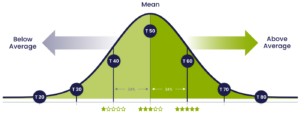
- Standardize and prioritize. Scores (T-Scores and the Applicant Score Report) put all candidates on the same scale, enabling hiring teams to compare fairly and focus interviews on strong behavioral signals.
This isn’t bureaucracy for its own sake. It’s a practical approach: evaluate early, interview those who are behaviorally qualified, and use interviews to choose among finalists — not to eliminate everyone who’s just borderline.
How Pre-Qualification Improves the Interview-To-Hire Ratio
When assessments are used at the top of the funnel, two things reliably happen:
- Low-probability candidates are screened out. A standardized behavioral assessment filters out applicants unlikely to demonstrate traits that predict success. This results in fewer interviews with candidates who simply don’t meet the job’s requirements.
- Interviews focus on differentiation, not exclusion. After removing obvious mismatches, interviews serve as tools to evaluate nuances — such as cultural fit, situational judgment, and comparative strengths — instead of just triage sessions to eliminate candidates. Interviewers make decisions among candidates already aligned with the Job Success Profile™, increasing the likelihood that an interview leads to a hire.
Practically, this boosts the interview-to-hire conversion rate and reduces wasted manager time. Scheig’s materials emphasize the value of being able to “identify and filter out half the number of candidates as unqualified,” which constitutes a significant operational saving.
Time Savings, Manager Sanity, Speed-To-Hire
If you run the numbers, the benefits are obvious:
- Time savings. Screening early leads to fewer interviews. Less time spent on unproductive conversations means more time for managers to lead.
- Manager sanity. Managers avoid sitting through interviews they know won’t result in hires. They report higher satisfaction when they interview credible finalists and when each interview has a clear decision point.
- Faster time-to-hire. Removing the low-probability candidates accelerates hiring. Clients and case studies regularly report significant reductions in time-to-hire — shorter pipelines, fewer round-trips, and fewer reopened vacancies. (Scheig’s assessments are designed to achieve this by placing applicants on the same behavioral scale for easier sorting and decision-making.)
A common theme emerges: reliably filtering half the applicant pool early on saves substantial time, and the business benefits of this efficiency build up across roles and hiring cycles.
Better Candidate Experience — Yes, Really
Counterintuitively, having fewer interviews can enhance the candidate experience. How?
- Interviews feel meaningful. When candidates are invited because they match job behaviors, interviews become constructive discussions about fit and next steps — not routine screenings.
- Transparent communication upfront. Interest & Willingness checklists and job previews help minimize surprises. Candidates value honesty about the job’s requirements and whether they are a good match.
- Faster feedback cycles. Spending less time on non-productive interviews accelerates decision-making and alleviates candidate anxiety.
A better candidate experience boosts employer branding and increases the chances of acceptance when an offer is extended.
Operational Appeal: The Business Case
Decision-makers focus on three key operational results:
- Time savings. Reducing interview time per hire cuts opportunity costs and staffing shortages.
- Manager sanity. Leaders can spend interview time where it matters most — reducing burnout and enhancing decision quality.
- Speed-to-hire. Quicker, confident hiring fills open roles sooner and boosts business productivity.
Scheig’s SelectRight™ flow—behaviorally anchored assessment, standardized T-scoring, and structured interviews—is designed specifically to deliver these operational outcomes. It emphasizes making interview time limited and valuable, boosting both process efficiency and the quality of hires.
Final Thought: Interviews Regain Their Value When They’re Earned
Interviews are expensive: they take up manager time, candidate time, and can slow momentum. When interviews are automated, they often go to waste. When candidates earn interviews by already demonstrating the behaviors that predict success, they become more decisive, humane, and efficient.
Takeaway: Focus interviews on candidates who have already demonstrated behavioral qualifications. This simple shift to earned interviews improves your interview-to-hire rate, saves managers’ time, speeds up hiring, and makes each conversation meaningful. This isn’t a minor change; it’s a process adjustment that protects the business and shows respect to candidates. To be efficient, start by deciding who truly deserves an interview.
FAQs
Why shouldn’t we interview every applicant?
Interviewing every applicant wastes manager time, reduces interview-to-hire ratios, and results in a poorer candidate experience. When interviews are conducted with people unlikely to meet job requirements, managers spend hours on low-value conversations, and hiring cycles become longer. Instead, interviews should be reserved for candidates who already demonstrate the behaviors that predict success, so conversations are meaningful and decision-focused.What does “pre-qualification” look like in practice?
Effective pre-qualification starts with a Job Success Profile™ (created from top performers), then evaluates applicants early using a job-focused tool (Interest & Willingness, Self-Ratings, and optional Critical Incidents). Standardized scoring (T-Scores and Applicant Score Reports) ranks candidates on a common scale, so hiring teams can filter out low-probability candidates before inviting them to interview.How does pre-qualification improve the interview-to-hire ratio?
By screening out applicants who don’t meet the Job Success Profile™, pre-qualification reduces the number of interviews with low probability of success. This allows interviewers to focus on distinguishing factors among qualified finalists — such as cultural fit, situational judgment, and strengths — which increases the likelihood that each interview results in a hire.Won’t fewer interviews harm the candidate experience?
No — when done correctly, fewer interviews enhance it. Candidates invited after pre-qualification have more meaningful conversations about fit and next steps. Interest & Willingness checklists and clear job previews reduce surprises, and faster feedback cycles decrease candidate uncertainty and strengthen employer brand.What are the measurable business benefits of earned interviews?
Earned interviews save managers’ time, boost their satisfaction, and accelerate the time-to-hire. In practice, organizations often filter out about half of applicants early on, reducing interview workload, cutting recruiting costs per hire, and enhancing pipeline efficiency. The overall result is higher-quality hires and a more scalable, repeatable process.