
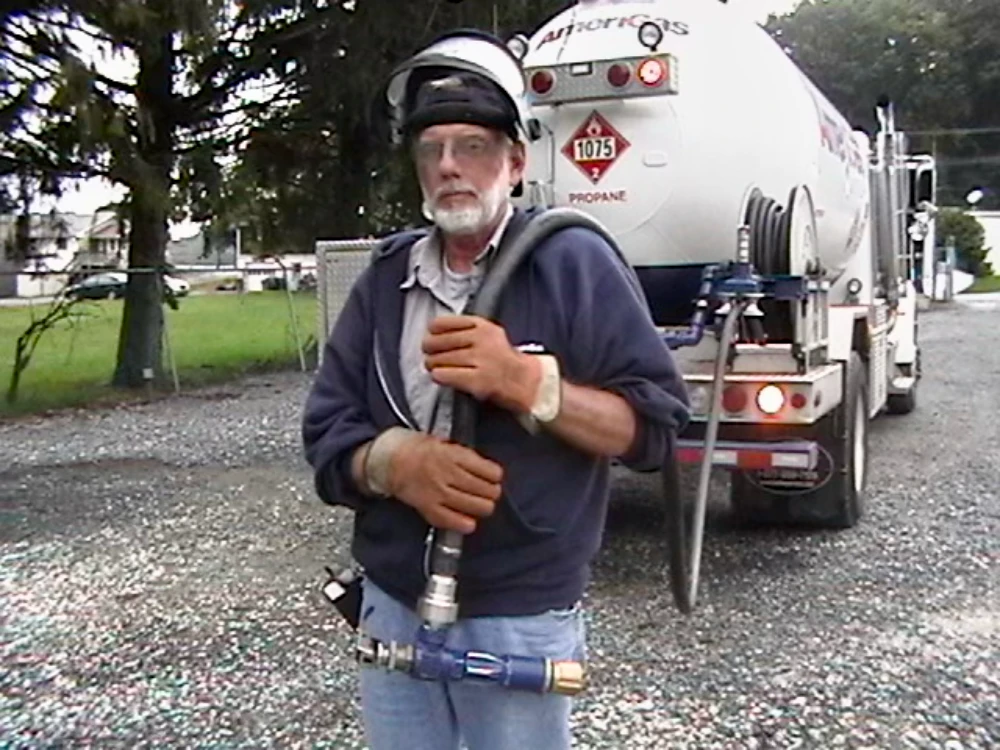
How Scheig’s SelectRight™ System Helped AmeriGas Establish Hiring Standards Across Roles and Locations
For organizations operating across many locations, maintaining consistency is one of the hardest hiring challenges. A company may have strong values, clear job descriptions, and experienced managers, yet still struggle with variation from one site to another. One manager may prioritize experience. Another may focus on interview presence. Another may emphasize availability, personality, or local urgency. Over time, the definition of a “strong candidate” can shift depending on who is making the decision.
For AmeriGas, the largest propane distributor in the United States, this challenge was especially significant. The company serves residential, commercial, agricultural, and industrial customers nationwide. Its employees work in roles where reliability, customer service, attention to detail, and safety are essential. Many positions involve handling propane, a hazardous material, which further raises the stakes of hiring decisions.
AmeriGas needed more than a hiring tool. It needed a consistent selection system that could work across more than 400 U.S. locations and support multiple job roles. The organization needed to help managers make better decisions while establishing shared standards for what successful performance looked like.
Scheig Solutions helped AmeriGas meet that need with customized SelectRight™ assessments.
The partnership began with job analysis and research. Scheig Solutions worked with AmeriGas employees to understand the requirements of key roles and the characteristics of successful performance. The initial focus was the delivery representative role, a critical position requiring safety awareness, reliability, precision, and strong customer interaction. AmeriGas later expanded the assessment process to office personnel, including customer relations representatives and district managers. In total, AmeriGas implemented three assessments for key roles.
This role-specific approach was important. Standardization does not mean using the same generic screen for every position. Effective standardization means establishing clear, consistent, job-relevant criteria for each role. A delivery representative, a customer relations representative, and a district manager all contribute to business success, but they do not perform the same work. Each role requires its own definition of high performance.
The SelectRight™ system enabled AmeriGas to evaluate candidates using a consistent model based on successful employees in the same role. Candidates received SelectRight™ T-scores, which helped managers gauge how closely a candidate’s assessment profile aligned with top performers. This established a shared benchmark across locations.
That benchmark helped answer an important question: How similar is this candidate to those who have already demonstrated success in this role at AmeriGas?
For distributed organizations, this kind of selection language is valuable. It provides managers across regions and locations with a common reference point. Rather than relying solely on individual interpretation, managers can use a scientifically grounded measure to support hiring decisions. It also gives HR leaders a more consistent way to guide, monitor, and support selection practices.
AmeriGas described SelectRight™ as helping establish high-performance standards for three key positions, along with talent selection and hiring protocols. This is one of the partnership’s most significant outcomes. The assessments were not simply used to screen candidates; they helped formalize what the organization valued in successful employees.
Implementation at scale required planning. AmeriGas needed to roll out the assessments across more than 400 locations, and Scheig Solutions provided a clear process. Assessment development took only a couple of weeks, while the broader implementation and training rollout spanned several months to accommodate AmeriGas’s business cycles and seasonal demands. Scheig Solutions led the training, while AmeriGas supported communication and coordination.
This training component was essential. A standardized tool only ensures consistency when managers understand how to use it. Managers needed to know what the assessment measured, how to interpret the results, and how SelectRight™ fit into the broader hiring process. AmeriGas described the rollout as smooth and well organized, noting that Scheig Solutions had the process worked out in advance.
The system also helped managers handle applicant volume more effectively. For customer relations representative roles in particular, managers appreciated having a tool that could prequalify applicants and reduce the applicant pool to a more manageable size. This saved administrative time and helped managers focus on stronger candidates.
At the same time, SelectRight™ did not remove the manager from the decision-making process. AmeriGas continued to use resumes, interviews, background checks, and managerial judgment. The assessment served as a structured decision-support tool. This balance allowed AmeriGas to improve consistency without making the process rigid or impersonal.
That distinction matters for organizations considering assessment tools. Leaders sometimes worry that standardization will remove flexibility or reduce hiring to a score. AmeriGas’s experience shows a better model. Standardization can create a stronger foundation for decision-making while still allowing managers to evaluate the full candidate picture.
Over time, AmeriGas also recognized the importance of ongoing manager education. New managers did not always understand the science behind the assessment. Some wanted to know which specific question led to a poor score, but SelectRight™ was not designed as a simple right-or-wrong test. It evaluated response patterns and compared candidates to successful employees in the role.
Scheig Solutions helped AmeriGas address this through training and support. Eventually, the two organizations developed an LMS course to help new managers learn to use the assessment properly. This helped maintain consistency as leadership changed and new managers joined the organization.
Another important validation came later when AmeriGas developed formal, company-wide core competencies. Because the SelectRight™ assessments had been created before those competencies were established, AmeriGas asked Scheig Solutions to review whether the assessments needed updating. Scheig Solutions conducted a review and confirmed that the existing assessments remained appropriate. This gave AmeriGas confidence that the original selection system still aligned with the company’s broader competency framework.
For HR and executive leaders, the AmeriGas case shows how structured selection systems can help shift hiring from local habit to an enterprise capability. In a distributed organization, consistency cannot depend solely on good intentions. It requires shared standards, role-specific criteria, manager training, and ongoing support.
Scheig Solutions’ SelectRight™ system helped AmeriGas build that structure. By comparing candidates to top performers, equipping managers with clear training, and establishing consistent protocols across roles and locations, AmeriGas adopted a more scalable and disciplined approach to hiring.
The broader lesson is clear: standardization does not mean removing judgment. It means equipping managers with better tools, clearer benchmarks, and a more consistent way to identify candidates likely to succeed. For organizations with many locations, multiple roles, and high-stakes hiring needs, that structure can turn selection into a strategic advantage.